
In the last week, Water Linked has attended 3 different events: Forsvarskonferansen, the German-Norwegian Defence Dialogue and the Ocean Tech for Dual-Use Demo Day. We went into these events with a question:
What do scientific, commercial and defence users need to turn advances in underwater autonomy into real operational capability?
One conclusion kept resurfacing: innovation alone is not enough. We need to close the gap between demonstrating that a technology can work and making it something that can be integrated, scaled, deployed and relied on in real operations. Three themes stood out that we will cover here.
1: Move faster from innovation to capability
Speed was central to the discussions at Forsvarskonferansen and the German-Norwegian Defence Dialogue. Some of the people we met at Forsvarskonferansen had travelled 42 hours from Kyiv to Trondheim to meet companies they work with, share what they are learning and find ways to do more together. It gave a different weight to a question running through the conference: How do we move faster?
Ukraine has demonstrated the importance of short feedback loops between operational needs and technology development. For European industry, the challenge is to better connect development, testing, procurement, production and operational feedback. For SMEs, that also means having the capacity to scale when technology proves its value.
This comes at an important time for Water Linked. Having recently joined the NORBIT family, we now have a stronger platform for growth, combining our underwater navigation and imaging technologies with NORBIT's broader capabilities, experience and reach.
Closing the innovation-to-operation gap is not only about developing new technology. It is about being able to deliver what works.

2: Better autonomy requires better sensing
At Ocean Tech for Dual-Use Demo Day, discussions about unmanned systems moved from conference rooms to the waterfront, with maritime technologies demonstrated in action. It highlighted another challenge: autonomy depends on information. An underwater vehicle needs to answer some fundamental questions: Where am I? How am I moving? What is around me? Where am I going?
And answering them underwater is difficult. GNSS is unavailable beneath the surface, visibility can be poor, communications are constrained and vehicles increasingly need to operate close to the seabed, infrastructure and other objects. The more we ask unmanned systems to do independently, the better their spatial awareness needs to become. This applies whether a vehicle is mapping the seabed for research, inspecting offshore infrastructure or performing a defence-related mission. The missions differ; many of the underlying sensing challenges do not.
The conversations around underwater robotics, navigation, sonar and AI reinforced the same point: Better autonomy requires better sensing.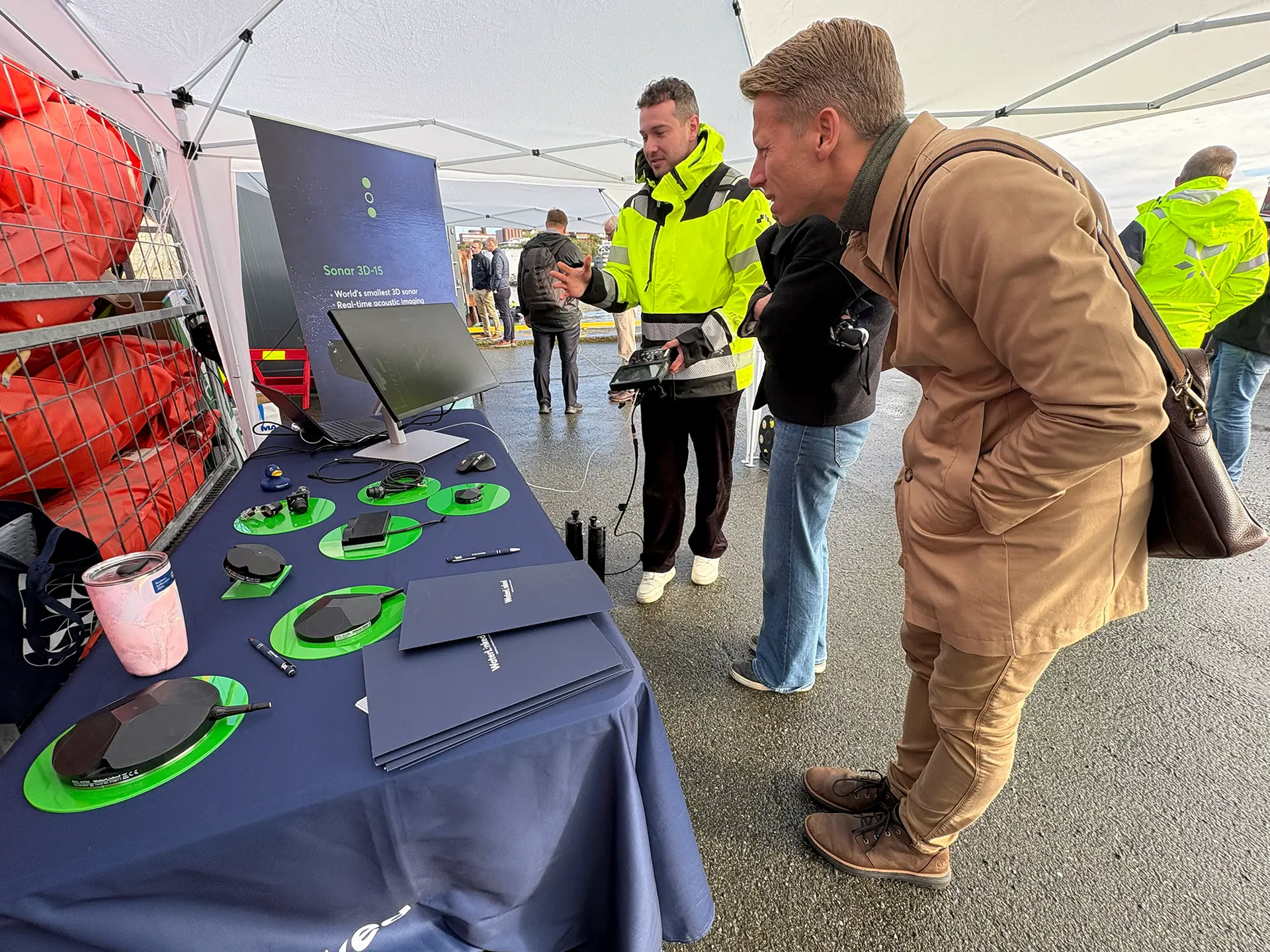
3: Make autonomy work across challenging underwater environments
The underwater environment is unforgiving. Currents, low visibility, changing seabeds, complex structures, limited communications and GNSS-denied operations can quickly expose the difference between a promising technology and an operational one.
Autonomous systems therefore need reliable information about both their own movement and the environment around them.
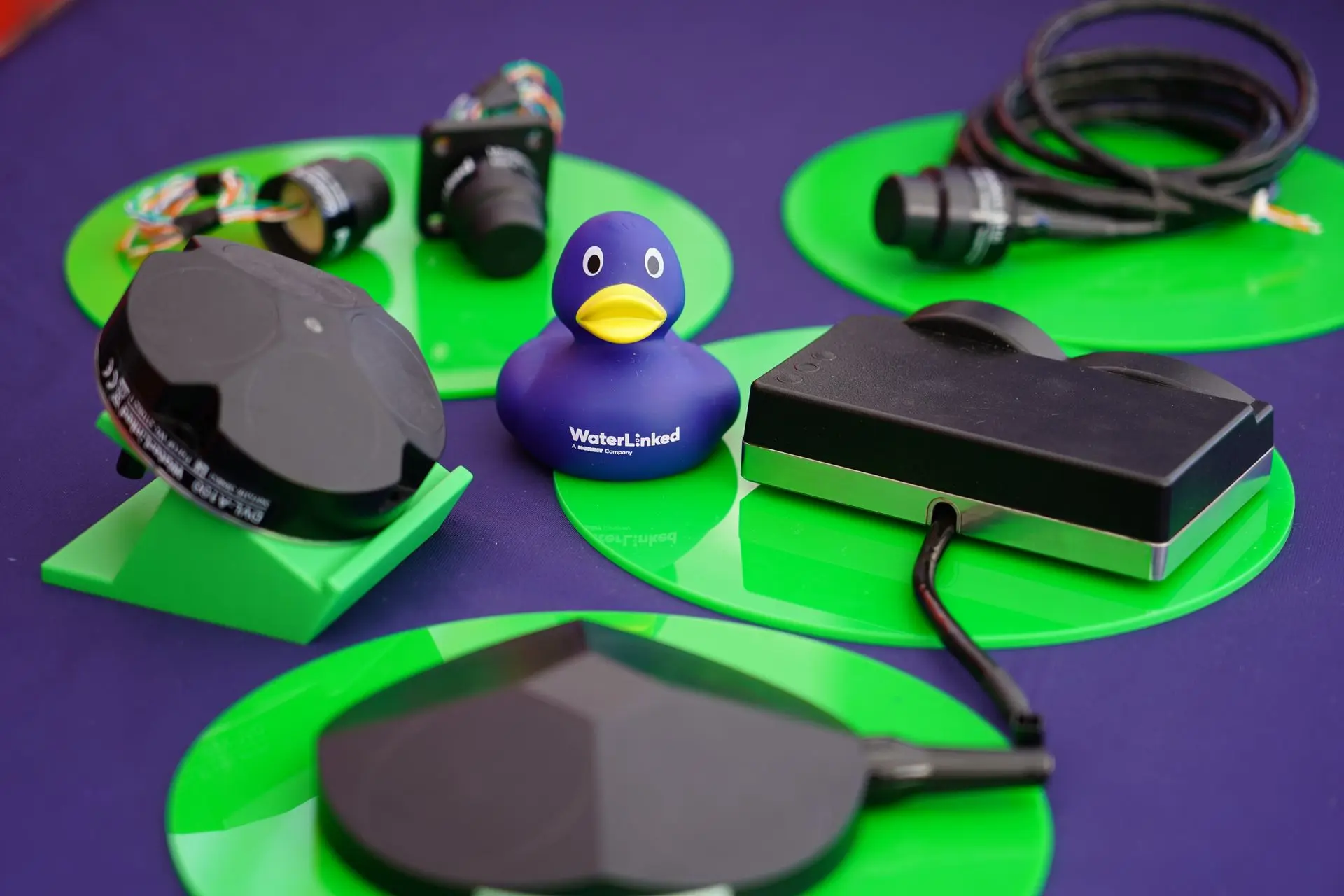
Proven technologies already provide important pieces of that picture. Water Linked's DVLs provide velocity and altitude information for underwater navigation. Underwater GPS provides an external acoustic position reference. Our acoustic Modem enables reliable communication and data exchange between underwater systems and the surface. And the Sonar 3D-15 provides real-time 3D information about the surrounding underwater environment, including where optical visibility is limited.
None of these technologies creates autonomy by itself. Autonomy emerges when sensing, navigation, perception, software and vehicle control work together. The challenge is to make those capabilities reliable and easy to integrate so autonomous systems can perform useful work across increasingly demanding underwater environments.
Different missions, shared challenges
Moving between these four events, perhaps the most interesting takeaway was not how different civilian and defence applications are, but how often they encounter the same barriers between innovation and operation.
We need shorter feedback loops between users and developers. We need to scale technologies that prove their value. And as unmanned systems become more capable, we need to give them better information about their position, movement and surroundings.
A scientific AUV, an offshore inspection ROV and an autonomous defence platform may have very different missions. But beneath the surface, they often need to answer the same questions. Closing the innovation-to-operation gap means answering those questions reliably in the real world and turning promising technology into capability that can be integrated, scaled and trusted.
Read more about our innovative technologies: