
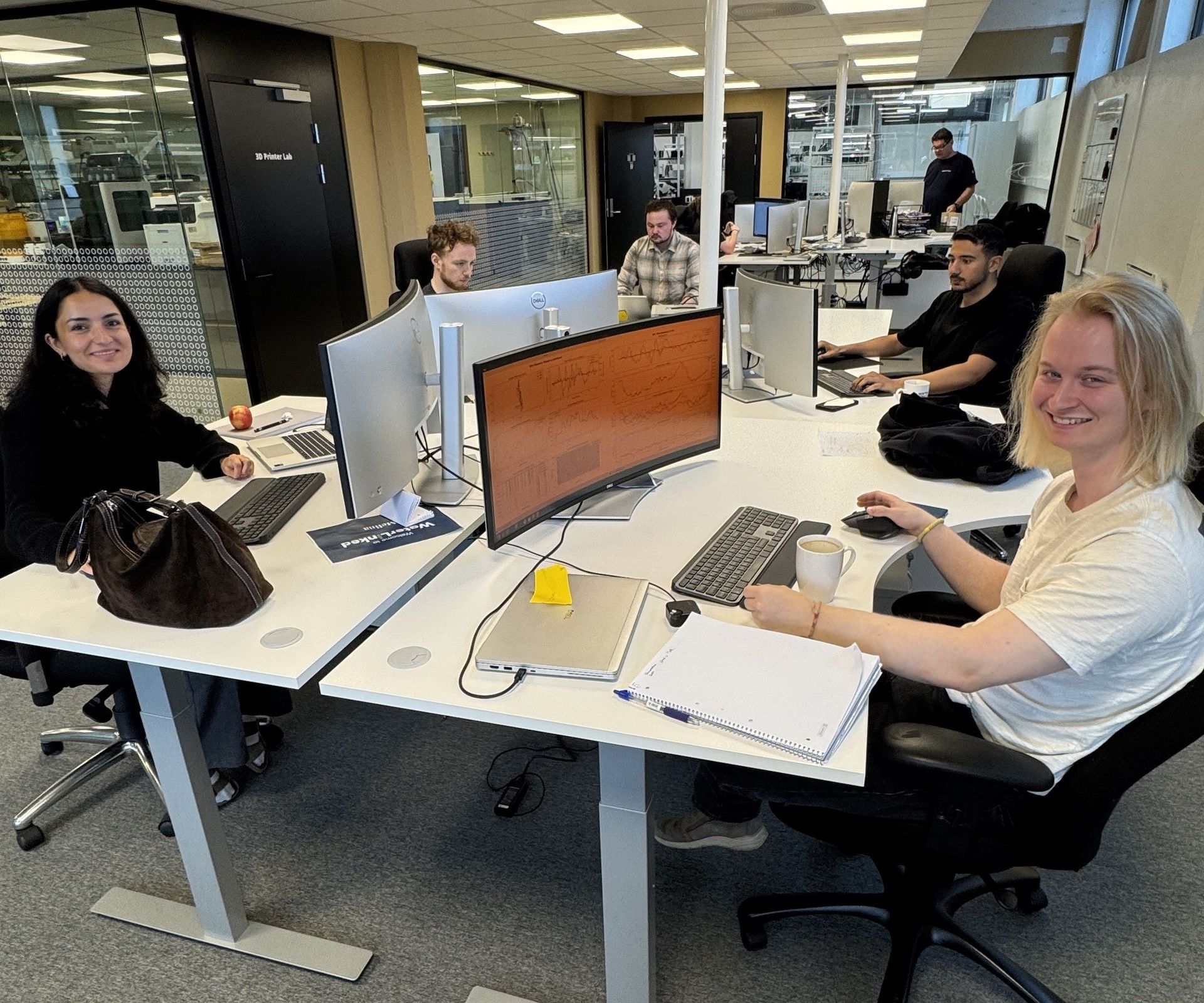
This summer, five students joined the Water Linked team for a hands-on summer of underwater technology, R&D, and real engineering challenges: Melina Rahimi, Daniel Marchand, and returning intern Ole Agaton Helmers, all master’s students in Cybernetics and Robotics at NTNU; Finnegan Hoyer, a master’s student in Cold Climate Engineering, Sea Track, at NTNU; and Yahya Alarian, a master’s student in Computer Science at the University of Stavanger.
Beyond their daily R&D work, the interns quickly became part of Water Linked’s summer culture. In their second week, they joined our annual company summer party and, throughout the summer, took part in Workation, an organisation for summer students in Trondheim that hosts weekly social activities. It gave them the chance to meet peers from other technology companies, explore the city, and enjoy the local community.
Hands-On Projects: What the Team Worked On
The summer combined a shared R&D project with three more specialised technical tracks. Guided by mentors Leonie and Thilo; Daniel, Melina, Yahya, and Finnegan began by exploring how sonar responds to different materials, surface textures, angles, and frequencies.
The goal was to better understand how underwater objects appear in sonar data and how different testing conditions affect the quality of the results. They also joined Thilo for ROV testing at Korsvika in Trondheim, helping collect live underwater datasets along the shore. From there, the interns moved into focused project areas.
Sonar Target Tracking
Melina and Ole Agaton worked on a real-time target tracking system using the Sonar 3D-15, with Leonie as their mentor.
Ole took the lead on project planning and structure, while Melina worked as a core developer. Together, they developed a system designed to track single and multiple objects in sonar data and explored whether the sonar could also help estimate the movement of an ROV.
By the end of the summer, they had successfully implemented both single and multi-target tracking, with the tracker capable of operating while acquiring live sonar data. The project also showed where the system became less robust as the tracking scenarios grew more complex, giving them valuable insight into both what worked and what could be developed further.
One of Melina’s favourite moments came during their first full field test.
“It worked surprisingly well on the first go. Seeing good results on the first try was really memorable.”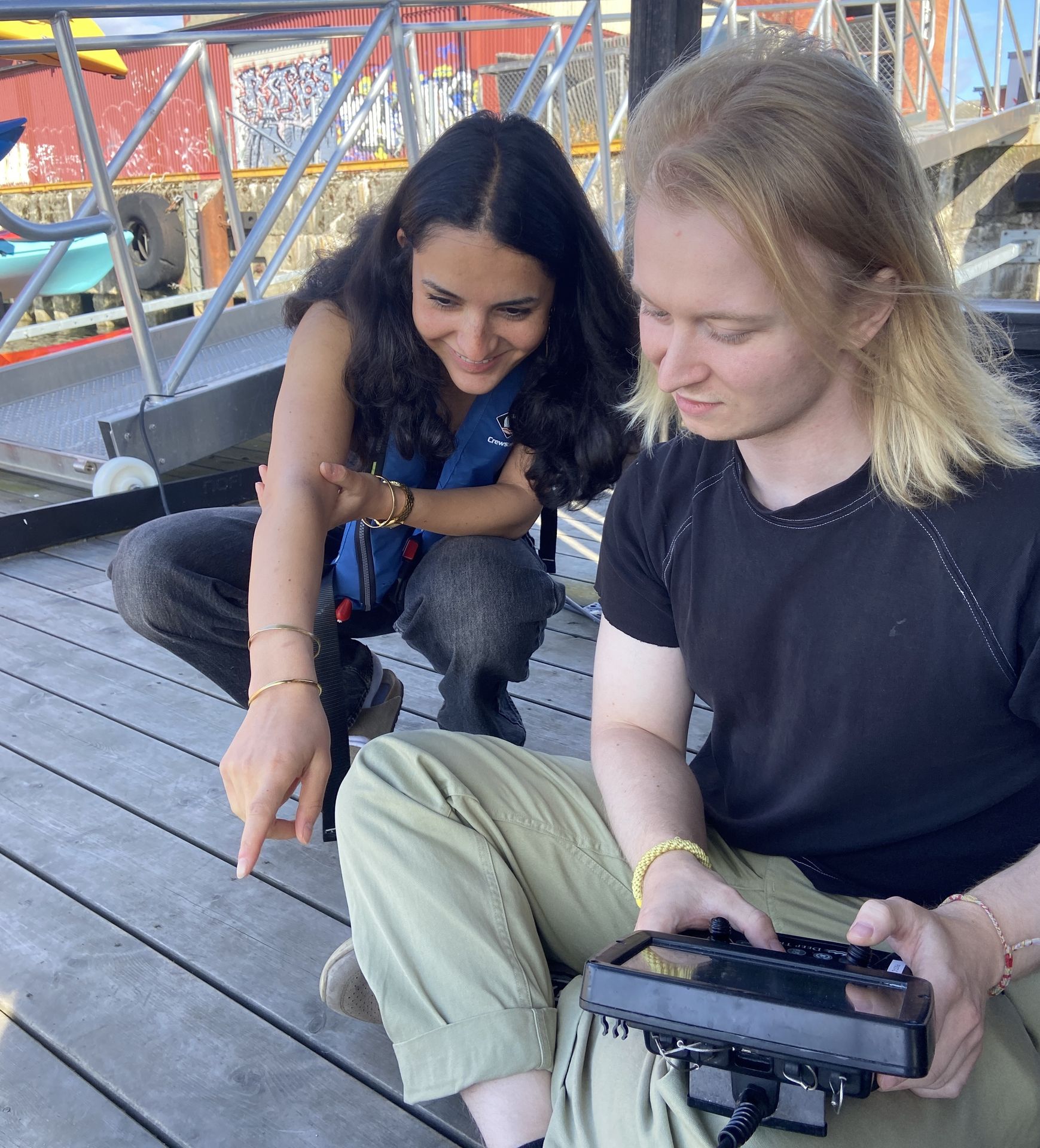
Magnetometer Calibration
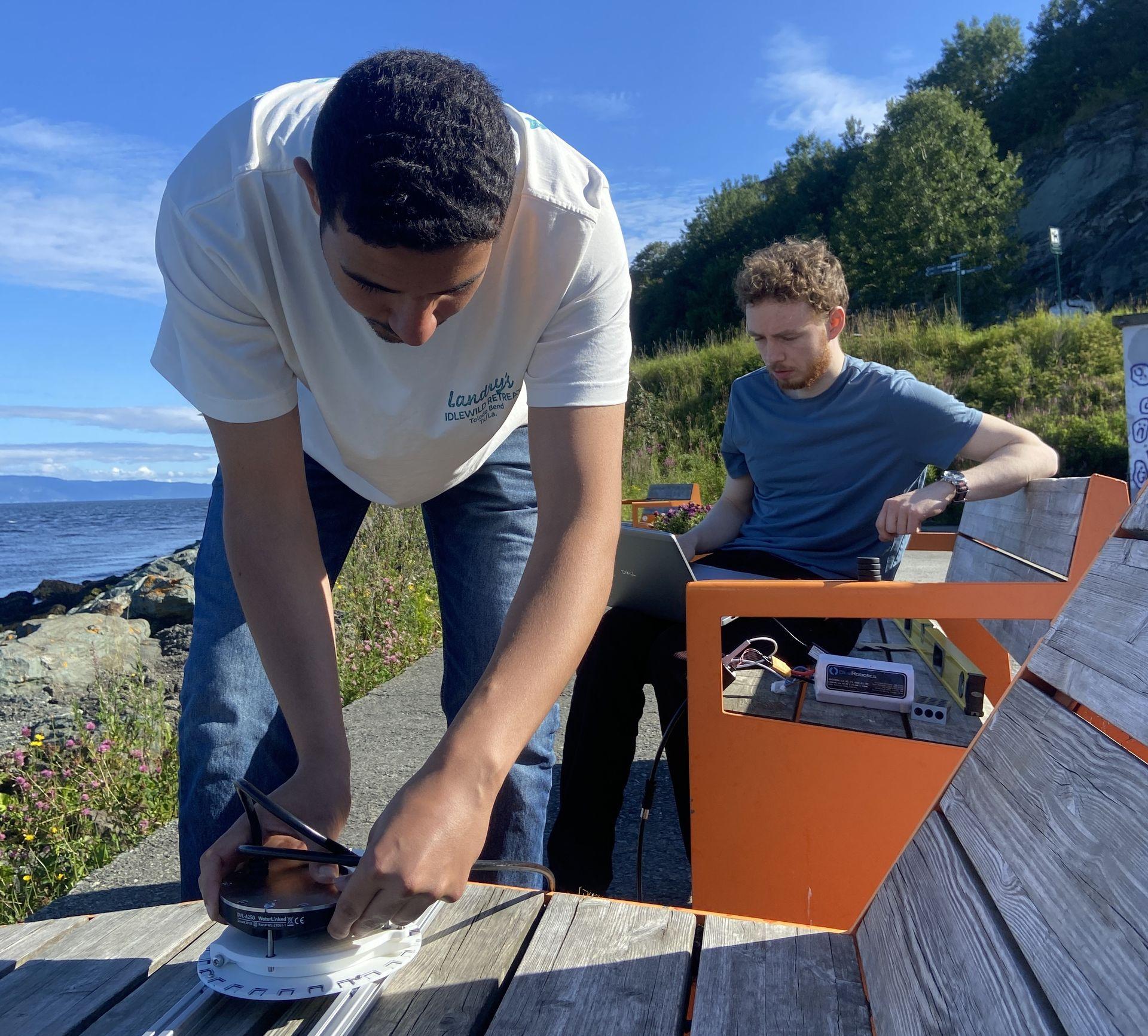
Daniel and Yahya worked together on simplifying magnetometer calibration for Water Linked’s DVLs, guided by Leonie with support from Thilo.
Magnetometer calibration helps ensure that a sensor gives an accurate heading. Traditional calibration can require the equipment to be moved through many different orientations, so Daniel and Yahya explored whether useful results could instead be achieved through movement in 2D, making the process simpler and more practical.
They developed and tested different approaches in Python using precision reference equipment. Several of their methods were confirmed to allow for calibration accuracy that was close to being within one degree, potentially sufficient for some users.
“When we got the calibration working and saw the graph line up perfectly, that was really nice,” Daniel said.
For both Daniel and Yahya, seeing the data fall into place after working through the mathematics and testing was one of the most rewarding parts of the project.
Acoustics and Transducer Testing
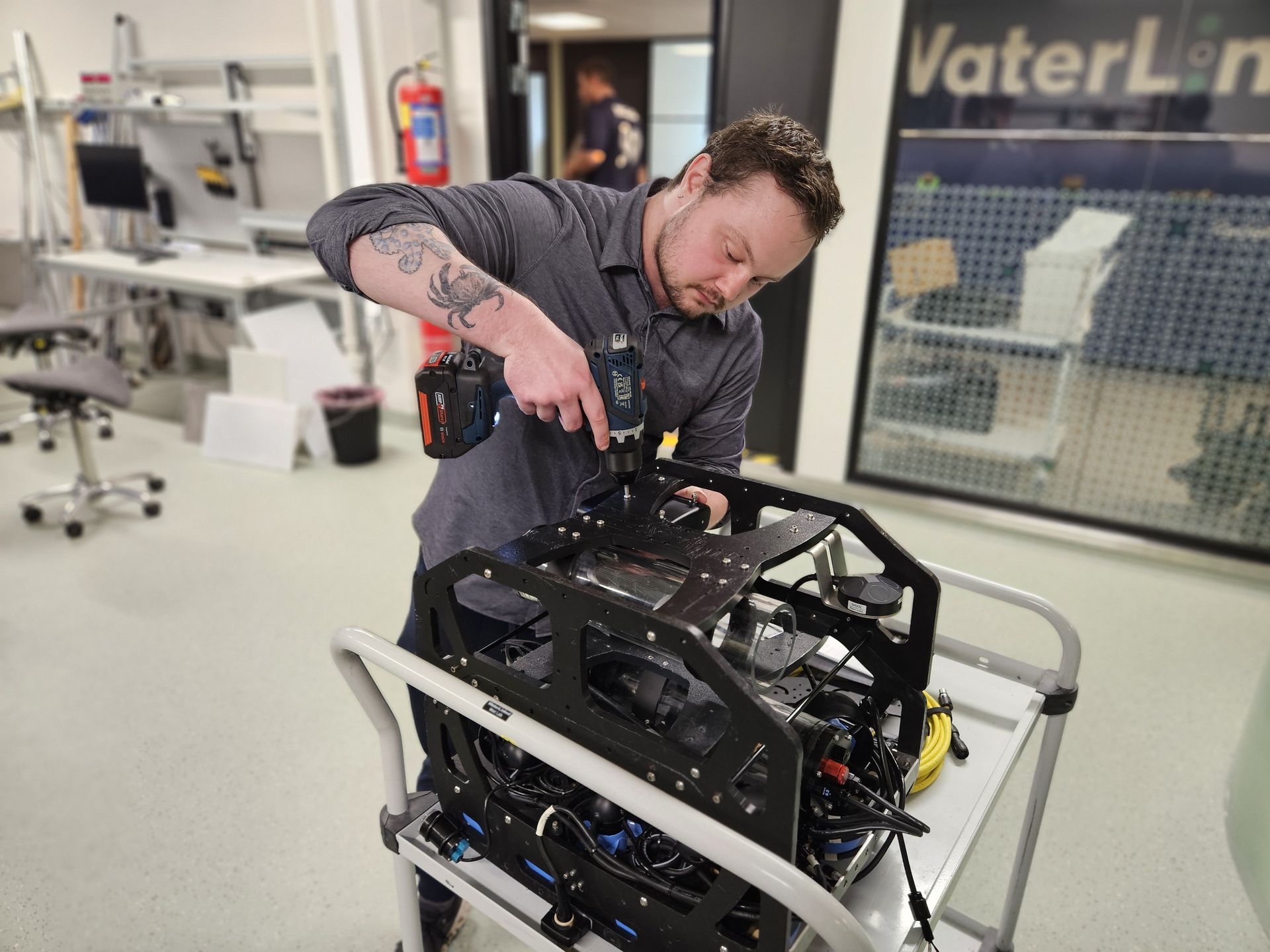
Finnegan focused on hardware and underwater acoustics with Andreas as his mentor.
One part of his work involved building a specialised hydrophone setup to measure how strongly Water Linked’s different DVL models transmit sound underwater. These tests were undertaken both before and after pressure testing, to identify any impact in performance following exposure to high pressure. The project provided source-level measurements for Water Linked’s A50, A125, A100, and A250 DVLs.
Finnegan also tested different materials used in the manufacturing of our products. The tests identified one material as particularly promising acoustically, while also showing where further testing is needed. After several days of preparing the hydrophone setup, seeing everything finally come together became one of Finnegan’s highlights.
“I got the test set up, collected data, and plotted it, and it all just looked perfect. The moment everything clicked into place was really satisfying.”
Stepping Up: Returning for a Second Summer
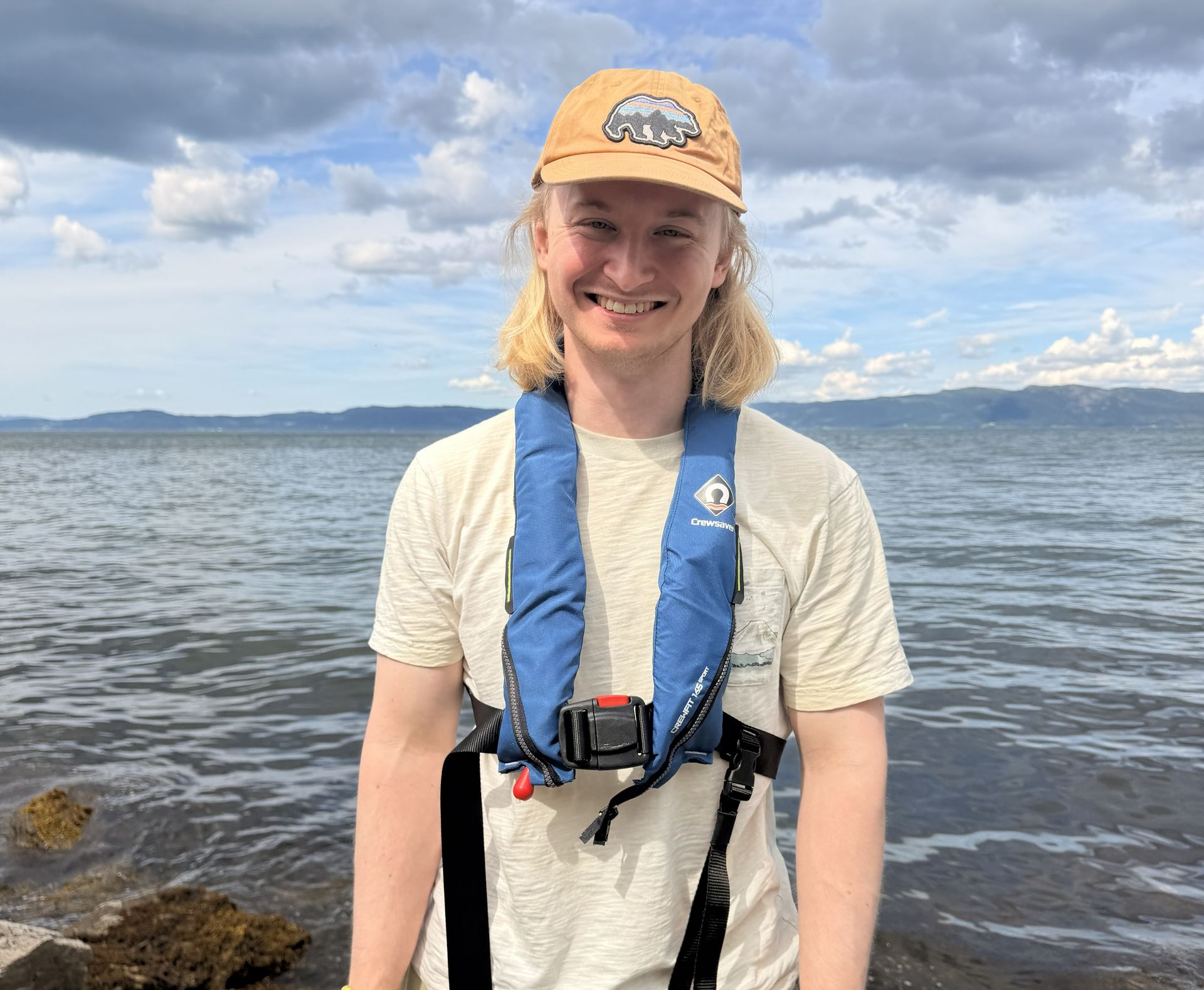
For Ole Agaton, returning to Water Linked in 2026 brought a very different experience from his first internship.
During his first summer, he mainly focused on software development and technical execution. This year, he returned with more responsibility and took a leading role in planning and structuring the Sonar Target Tracking project.
Even before the internship began, Ole was involved in architectural planning. He helped define ambitious goals while dividing the project into separate modules so additional features would not put the minimum viable product at risk.
“The main difference was that I had more responsibility now. I planned the project to a large degree, so I got to test myself on structuring teamwork.”
The team separated essential functionality from features that could be explored if time allowed.
“We set the goal relatively high, and we finished with a bit more than the baseline.”
Ole’s role also involved coordinating the work, distributing tasks, and balancing technical ambition with the time available.
His reason for returning was closely tied to the independence he experienced during his first summer.
“I liked the environment, and we got a lot of opportunities to work independently and were trusted to do the job.”
That trust became even more meaningful in his second year.
“I felt I had a direct influence on how the final product turned out, which gave me an even greater sense of ownership.”
The second internship allowed Ole to build on his technical experience while developing new skills in planning, teamwork, coordination, and technical leadership.
Inside the Experience: Life, Culture, and Freedom at Water Linked
Beyond the projects themselves, the interns repeatedly highlighted the level of trust and independence they were given.
For Finnegan, this became clear on his first day, when he needed to prototype a part using a 3D printer.
“Where I used to work, I would have had to get it approved by at least five different people. Here, Andreas just showed me how to connect to the printer and said, ‘Use it whenever no one is printing something on it.’ That was pretty crazy for me.”
The interns also noticed Water Linked’s flat hierarchy and how closely R&D, testing, production, and final assembly work together.
“I was positively surprised at how everything was done in the same office, and that you actually produce the sensors here,” Melina said.
For Yahya, the international and collaborative environment was equally important.
“People were really helpful, warm, and collaborative. I never felt stressed or pressured.”
The interns had space to explore solutions independently, while mentors and colleagues across the company were available whenever they needed input.
Lessons That Last Beyond the Summer
The projects gave the interns a clearer understanding of how engineering works outside the classroom.
Melina developed her approach to software architecture and learned the value of reviewing a system’s structure before beginning to code. Her work with target tracking also encouraged her to adjust her university plans so she could take an advanced course in sensor fusion.
Daniel and Yahya strengthened their knowledge of magnetometer calibration, data analysis, and mathematical reference frames, while gaining experience in testing theoretical calculations against physical equipment.
For Finnegan, careful preparation became one of the biggest lessons from working with physical systems.
“When physically designing something, it is worth putting in the effort beforehand. Measure twice, cut once.”
Alongside the technical skills, the interns gained experience in planning their own work, collaborating across disciplines, asking for help, and taking responsibility for real project outcomes.
Looking Ahead
As the summer came to an end, the interns described their experience using many of the same themes: hands-on, inclusive, collaborative, trusting, and warm.
Their projects differed, but their advice to future applicants was similar.
“I would recommend it if you want to actually do stuff and handle a proper project. It’s the best arena to learn and actually develop skills,” Melina said.
Daniel highlighted the combination of responsibility and support:
“You get real responsibility and ownership of what you’re creating, while still having a lot of guidance along the way. As a Cybernetics student, it’s great to actually use what you’re learning, not just programming, but maths and other relevant skills too.”
For Finnegan, it mattered that his work could continue to have value after the internship.
“I felt pretty involved in something that will last even after the internship is over.”
Yahya described the internship as a realistic introduction to professional engineering work.
“If you want a really hands-on and accurate simulation of what it’s like to work in this field, with genuine responsibility, I think it’s the way to go.”
For the 2026 cohort, the summer was an opportunity to contribute to real underwater technology, develop technical and personal skills, and experience what it means to turn ideas into working solutions.